May 7, 2024 App Development
Flutter vs. React Native: Which is More Popular?
May 7, 2024 App Development

Table of Contents
May 7, 2024 App Development / Neha Joshi
Choosing a framework for mobile app development often comes down to Flutter or React Native. Each has unique benefits that make them favorites among developers. But which is more popular? This post explores both in detail. We’ll look at what sets each apart to decide which leads the mobile app development world.
Flutter and React Native are big names in mobile app development. They’re known for their high-performing, versatile development frameworks that have changed how developers build apps. Flutter comes from Google. It’s an open-source UI software development kit that lets developers create applications for mobile, web, and desktop from one codebase. It utilizes Dart, a powerful, adaptable programming language by Google. And its host of widgets helps create standout user experiences.
In the opposite corner is React Native, the brainchild of Facebook. This popular open-source mobile app framework has made waves in the developer community. It uses JavaScript and React (a JavaScript library for crafting user interfaces) to make mobile apps.
This makes React Native popular among JavaScript developers, who appreciate its familiar language and structure. Both Flutter and React Native aim to simplify cross-platform app development, but they’re different. Let’s explore their unique characteristics and compare them. We’ll see which one tops in the changing world of mobile app development. This comparison is exciting!
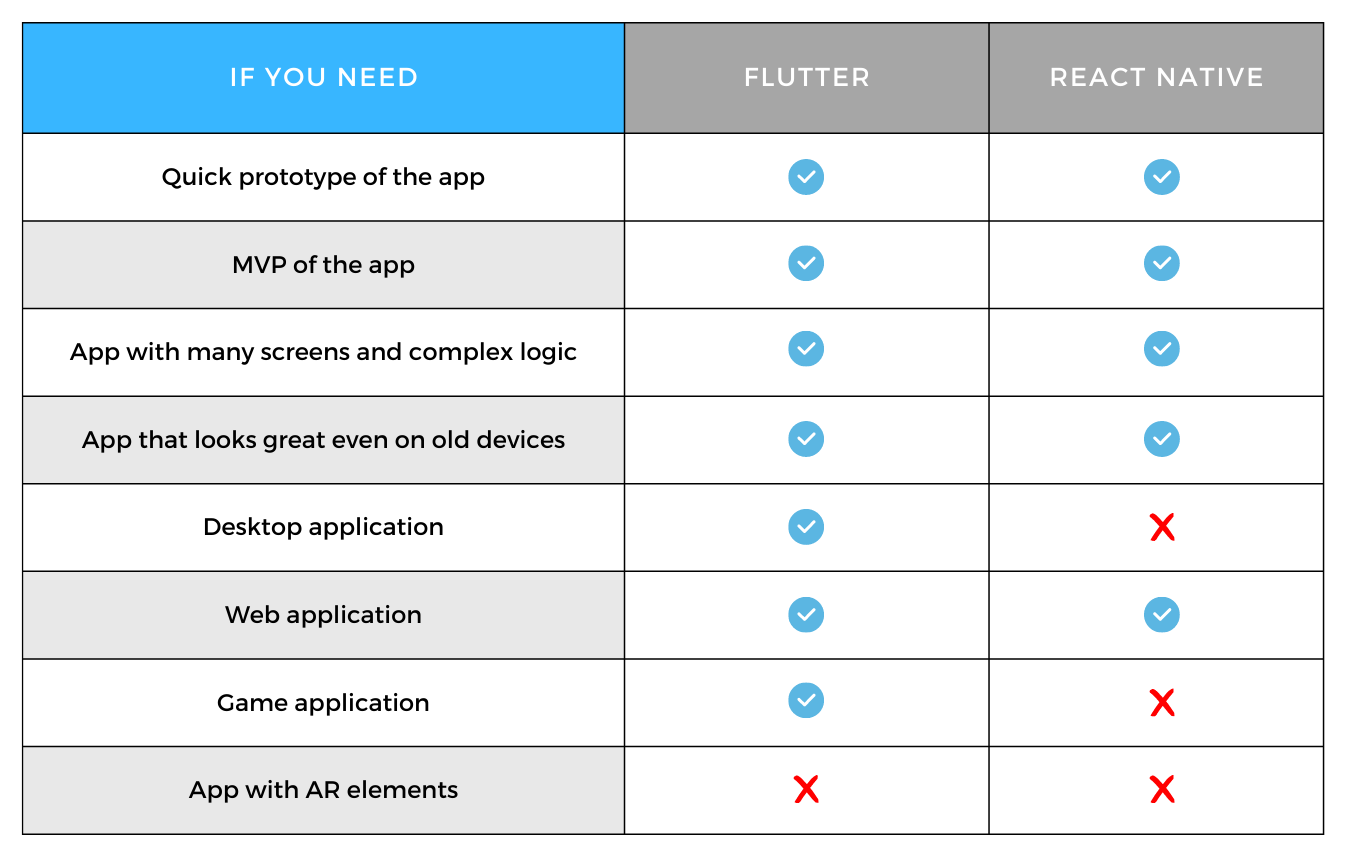
We check Flutter and React Native’s popularity by looking at their communities and developers. Both have strong, active communities. The 2021 Stack Overflow Developer Survey revealed that React Native is a tad more popular, with 12.2% of developers liking it more. Flutter is chosen by 11.5% developers. Even though Flutter is newer, its swift rise is amazing. This indicates its potential to close the preference gap.
Remember, these numbers can change. Tech world changes can sway developers to one framework or the other due to updates, new features, or project needs. Currently, React Native has a slight lead, but don’t overlook Flutter’s steady, awesome rise!
Seeing the whole scenario, the close percentages show a strong rivalry between these two systems. This competition drives Facebook and Google to be creative and enhance their tools, benefiting the developers and the applications they construct.
Finally, the choice between Flutter and React Native is often influenced by personal comfort, coding language familiarity, the demands of the ongoing project, and individual programming methods. Therefore, while these figures suggest a trend, they do not solidly pinpoint which system is superior or more preferred. The ever-changing environment of programming keeps this race ongoing with no certain winner.
Let’s march ahead to gauge these systems on other vital aspects like performance and efficiency. Strap in as we plunge into this intriguing tug-of-war between Flutter and React Native.
Reviewing the efficiency and output of both systems further illuminates their appeal. Flutter appears to have a slight advantage, mainly due to the usage of Dart language and absence of JavaScript bridge, assuring quicker code execution. This structure allows Flutter to interact with the platform without using a JavaScript bridge, leading to superior performance and fluid animations.
React Native is no slowpoke when it comes to performance. Despite relying on the JavaScript bridge for updates and rendering, it gives a robust performance that fills most app requirements. It uses JavaScript a popular, universally accepted programming language that makes writing in React Native easy and efficient, especially if you’re already familiar with the language.
Then again, for apps needing heavy graphics or significant computational tasks, Flutter offers superior performance. Dart’s compilation to native code ensures Flutter apps consistently run at 60fps, eliminating the need to switch between JavaScript and native languages.
Importantly, both frameworks are enhancing their performance capabilities and are evolving fast. For example, Facebook is readying an important upgrade to React Native (code-named ‘Fabric’). This aims to expand the framework’s performance by overhauling the JavaScript bridge. In short, Flutter appears to top React Native in this comparison. But, that doesn’t mean that React Native can’t deliver effective, high-performing apps. The performance gap might be tiny in many scenarios, and React Native might be attractive for its simplicity and familiarity, especially for JavaScript programs. As always, there’s no outright ‘best’ in the tech sector. The prime choice hinges on the project’s particular needs, resources and context.
Let’s talk about how often Flutter and React Native are used and about their great applications. React Native isn’t new. It’s been around longer so more people use it. Big apps like Facebook, Instagram, and Skype were built with it.
Flutter though, is newer. But that doesn’t mean it’s not worth it. Developers and businesses like Google Ads, Alibaba, and eBay chose Flutter. And it’s a big deal because Flutter is still new.
People like Flutter’s perks like a big library of widgets (these are tools for building apps) and how well it works. It’s catching up to React Native, even though it came later.
The main point here is both are good, they’ve have been used to build apps we know. But what’s more important is what’s coming next. Tech changes fast. Which framework gets adopted depends on new tech, support from developers, and what businesses need.
React Native currently owns a big part of the market, but Flutter is catching up fast. People are excited because these two systems keep getting better. They’re always competing to see who can become the top choice for making mobile apps. The best thing about this friendly competition? It’s the app makers and businesses! They get to use great tools that keep on improving for their mobile app needs.
Learning a new tech system or structure can be easy or hard. It all depends on how steep the learning curve is and the helpfulness of the guides available. For React Native and Flutter, your past programming experience will tell how steep the learning curve might get.
If you’re a master of JavaScript, learning React Native won’t be so hard. It’s rooted in JavaScript—a huge hit with developers. This makes it easy for those who already know JavaScript. The large supply of tools and helpful advice for JavaScript makes this journey smoother.
But for Flutter, you must learn Dart first. Dart is a strong and flexible language, but not as famous as JavaScript. For some developers, especially those just starting with Dart, it could be a rough start. But that doesn’t mean Dart is very complicated and difficult. It’s made to be easy to understand. Plus, it’s a fun way to learn something outside of JavaScript.
Learning becomes much simpler with good documentation. Flutter and React Native shine here, with detailed guides, API references, and lots of examples. They help developers to navigate their platforms comfortably.
React Native’s documentation is quite straightforward, with plenty of JavaScript resources online due to its high popularity. Flutter’s documentation stands out for being complete and clear, with interactive examples that make learning Dart and Flutter fun and valuable.
In the end, your background, your will to learn a new language, and the support you get from the communities will shape your learning curve. But whether you choose React Native or Flutter, you can expect rewarding learning, guided by thorough documentation and supportive communities.
App security is a must in mobile app development. When choosing between Flutter and React Native, knowing their security capabilities can assist in making the choice. Let’s compare them.
React Native uses JavaScript’s vast security measures effectively. It has powerful methods for managing normal security issues like code injection, cross-site scripting, and data leakage. Plus, many third-party security libraries can be added to React Native to boost app security. Facebook provides extra security to the platform, which adds to its trustworthiness.
Flutter uses Dart, a language with many security features. Dart is strong in typing and Ahead-of-Time (AOT) compilation, which finds and fixes security issues while developing. Also, Dart ensures data objects get initialized before use. This reduces the risk of null pointer exceptions, which can cause crashes or security weaknesses. Also, Google made Flutter and regularly improved its security aspects.
For encrypting data, both React Native and Flutter use strong methods. React Native built-in APIs for secure storage and supports added encryption plugins. Flutter, for its part, uses the FlutterSecureStorage plugin. This plugin creates a safe place to store sensitive data like tokens and passwords, further securing your data.
Despite this, developers still need to use these security features to their advantage. Good coding practices, frequent security checks, and a strong understanding of the chosen framework’s security are key. These are vital to building a safe mobile app.
Ultimately, both Flutter and React Native are strong in security. The choice depends on how well the developer knows each framework’s security features and what the mobile app project needs for security.
When debating Flutter against React Native, app scalability is key. This is the app’s knack for handling more users, data, and requests without cracking. As an app grows with more usage and complexities, a good one keeps performing. React Native does well here. It relies on JavaScript. This opens doors to a treasure-trove of helpful libraries for enhancing app growth.
Added flexibility? Absolutely! Developers can cherry-pick third-party libraries perfect for their needs, paving the path to app growth. Also, since JavaScript is popular, finding seasoned developers for work on your React Native app is smooth sailing.
The Flux architecture from Facebook is another asset of React Native. It’s tailor-made for larger apps, taking care of data flow and state management. The new context APIs and hooks are icing on the cake, further sharpening React Native’s ability to tackle complicated state management scenarios – a crucial scalability ingredient. On the other hand, Flutter banks on Dart, a strictly typed language.
This minimizes runtime errors, beefing up app stability as it expands. Flutter also packs a punch with its wide array of widgets and Dart’s useful features (like async-await). All of these make developing growth-ready apps a cinch.
Simply put, Flutter scales well thanks to its reactive design. State management tools like Provider, Riverpod, or BLoC manage the app state efficiently and aid in scalability. Ahead-of-Time (AOT) compilation of Dart, which Flutter uses, boosts performance by reducing the app size and the startup time, helping scalability. Both React Native and Flutter can build scalable applications.
React Native uses the flexibility of JavaScript and its libraries, while Flutter taps into Dart power and its reactive design. The project’s scalability needs and the team’s know-how in the technologies would influence the choice.
After this Flutter versus React Native comparison, it’s clear that the fight is close and the popularity gap is shrinking. React Native keeps its place due to its mature community, wide adoption, and familiarity with JavaScript. On the other hand, even though Flutter entered the game later, its fast growth, impressive features, and Google’s support have garnered attention. With both frameworks evolving constantly, they’re pushing limits in cross-platform mobile app development. Deciding between Flutter and React Native? Consider your project’s special needs, your team’s knowledge of JavaScript or Dart, and the specific tools you need from a development framework. Though there’s no perfect fit for every situation, take comfort in knowing that both offer a sturdy base for crafting excellent, varied mobile apps.
Flutter and React Native are both popular choices – a sign of the tech world’s fast-paced change. We may not have a clear leader in terms of popularity, but both platforms shine on their own, each bringing distinct traits and powers that enable developers to build remarkable mobile apps. Keep an eye on the ongoing Flutter vs. React Native debate. It’s an area filled with potential growth and improvements in mobile app creation.
Alcax Solutions is a top React Native App Development Company that connects you with the best farm weather app developers with flexible and economical engagement models ranging from hourly, monthly, and fixed-cost billing. Hire React Native App Developer from Alcax today and embark on your mobile app development journey with confidence.